Sharing Stream Research with the Savegre Valley: A Semester of Field Research, Community Partnership, and Creation Care
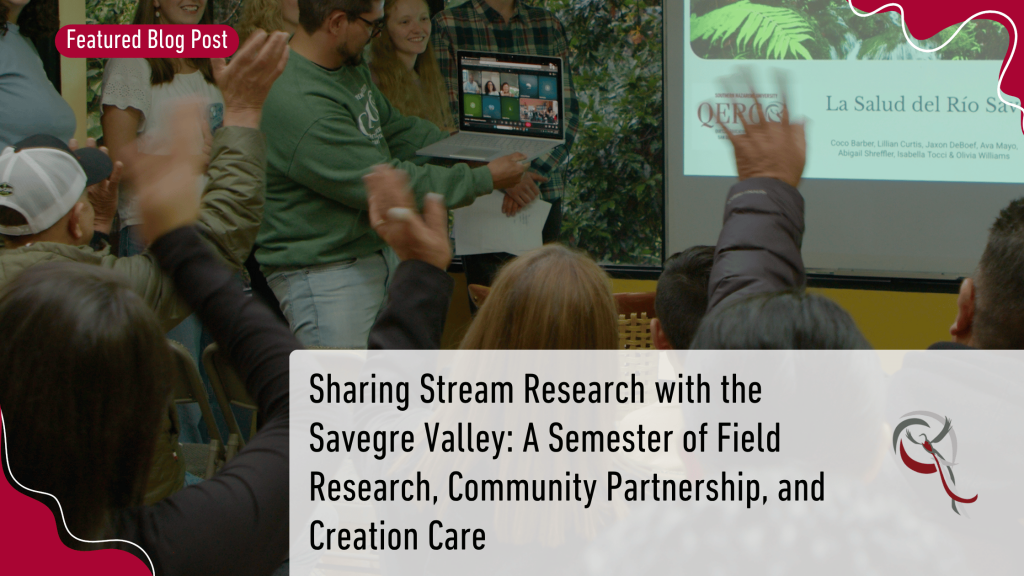
In our last week at QERC, we had the joy of welcoming the Savegre Valley community into our living laboratory here in San Gerardo de Dota. As part of our Christ-centered commitment to stewardship and Creation Care, our 2026 cohort shared the results of their semester-long field research on the stream ecology of the Río Savegre—right in QERC’s backyard.
Their project focused on the diversity of aquatic insects and the abiotic factors that may influence that diversity across several reaches of the river. By comparing sites upstream—largely away from human influence—with downstream sites closer to town, students explored patterns that matter for local decision-making as development continues, businesses operate, and visitors are guided along the valley’s trails.
This was experiential learning with academic rigor: from braving the cold water during field sampling to long hours at the microscope, students conducted every aspect of the study themselves. Their work adds to QERC’s long history of community-oriented research—research that is designed not only to learn about this place, but to learn with the people who live and work here.
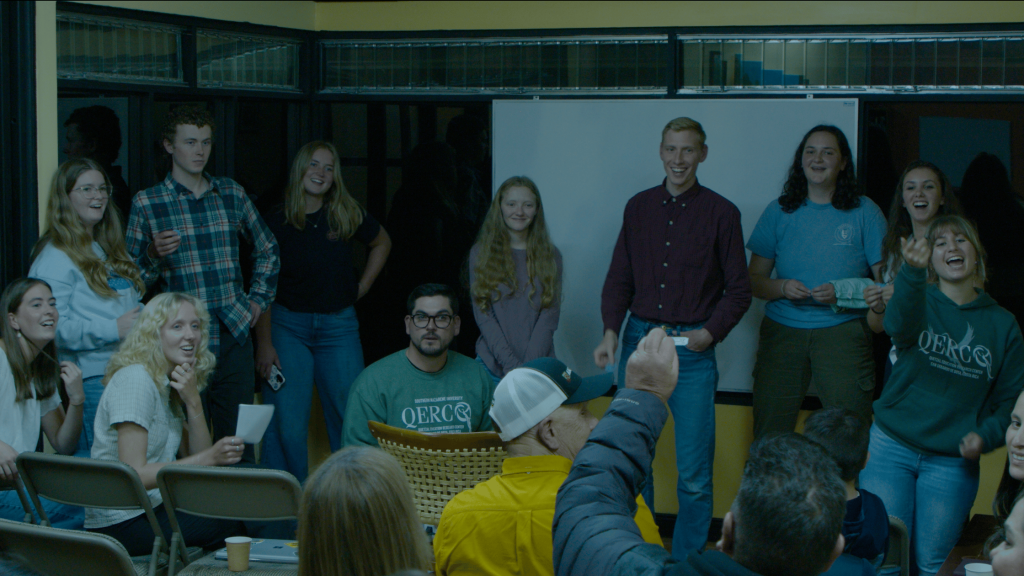
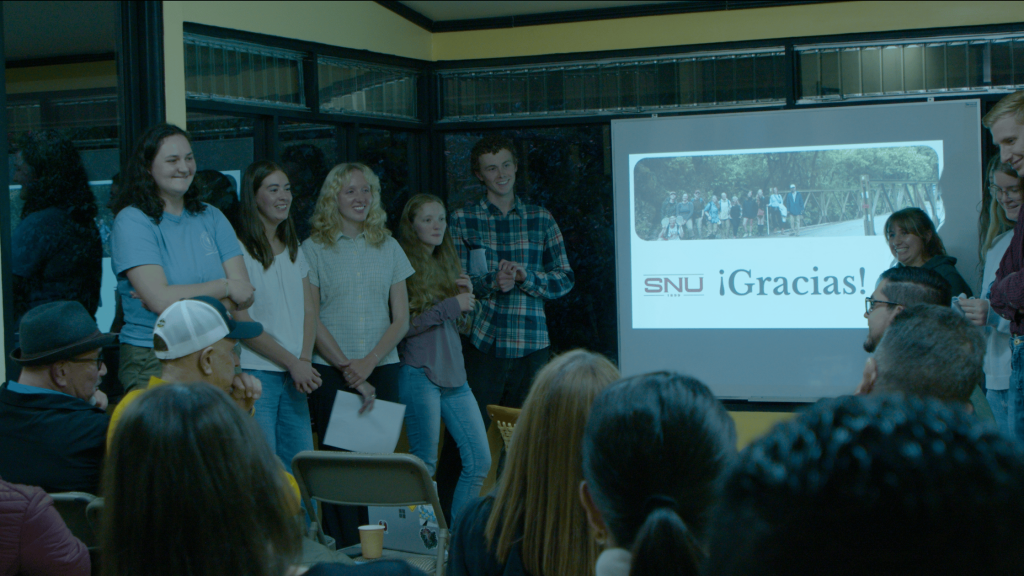
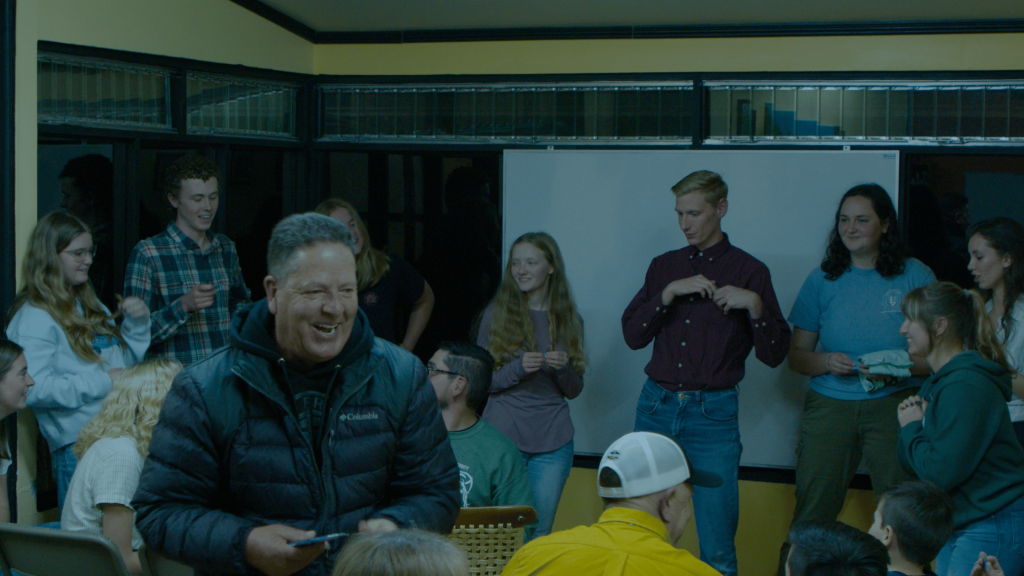
To share what they found, QERC hosted a presentation night and invited anyone interested to attend. Before the formal talk, we held an open house in the museum, bringing out insect, plant, and taxidermy collections and sharing about past research carried out with our distinguished professors. Locals enjoyed photos, specimens, and refreshments while talking with students—an encouraging sign of the relationships God has been growing over the semester through partnership and presence.
The students presented in Spanish, drawing on what they learned throughout the term to communicate their results clearly and accurately. We also opened an online meeting so QERC leadership and students’ families could join. One key result was that although downstream sites showed worse abiotic conditions, important bio-indicator insect species were still present—suggesting the stream conditions could improve, while the river remained in healthy condition overall. Students also observed an influx of worms downstream, associated with sediment at the bottom of the streambed that was not found upstream.
During the question-and-response time, community members offered valuable insight into local history and factors the students may not have considered—exactly why local–global partnership is essential for viable conservation. Pablo Chacón noted that worms were introduced to feed trout that had also been introduced, in support of fishing activities in the valley. Conversations like these strengthen future research questions (including the worms’ distribution downstream) and help QERC listen well as we seek to give back to the valley and care for the environment we share.
If you’re a partner or student who wants to stay connected to hands-on research, community collaboration, and Christ-centered stewardship at QERC, we’d love to share more about upcoming projects and presentation nights—reach out and learn how you can walk with us in this work.
One Comment